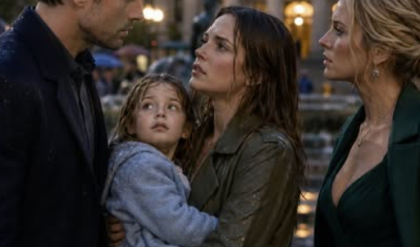
When His Little Girl Said, “My Mom Has a Tattoo Just Like Yours,” the Mafia Boss Realized the Wife He Signed Away Was Alive, Hiding His Child, and Still Carrying the Love That Could Destroy Them Both
Part 3
Dante Valerio had learned young that grief was quieter than rage.
Rage broke glasses.
Rage started wars.
Rage made men kneel and beg under the wrong end of a gun.
But grief sat in the lungs.
It stayed there.
It turned every breath into a punishment.
For five years, Dante had lived with the grief of Cassandra Moore.
At first, he had told himself she was safer gone.
That was the lie he used to survive the night he signed the divorce papers.
He had signed because Marco Santini had sent him three photographs: Cassandra leaving the clinic, Cassandra buying oranges from a street vendor, Cassandra asleep in their bed with sunlight across her throat.
On the back of the last photograph, Marco had written, Beautiful things burn easily.
Dante had wanted to tell her.
God, he had wanted to tell her everything.
But his world had rules.
Cruel ones.
If he showed fear, men like Marco would follow it.
If he loved openly, enemies would use her body to write their messages.
So Dante did the only thing a terrified man with too much power and not enough faith could think to do.
He made her hate him.
He let his men mock her.
He let her walk out.
He told himself he would keep watch from a distance until the war with Marco ended.
Then she vanished.
Not moved.
Not traveled.
Vanished.
Three weeks after the divorce, her car was found burned outside Newark.
A body too damaged to identify had been pulled from the wreckage.
The police said dental records would take time.
Dante knew before they said it.
He knew because the world had gone soundless, because Vincent would not meet his eyes, because the universe had a way of taking beautiful things from men who had touched too much blood.
For months, he had not slept.
Then one night, drunk on grief and fury, he tore apart the box of things Cassandra had left behind and found the ultrasound photo hidden inside the lining of her old leather bag.
A child.
Their child.
He had broken his hand on the marble floor that night.
Then he had held the picture against his chest and made no sound at all.
Vincent had stood in the doorway, pale as death.
“You knew?” Dante had asked.
Vincent had said nothing.
That silence had been confession enough.
Dante should have killed him.
Once, he would have.
Instead, he had walked past him into the snow, still holding the ultrasound photo.
He had stood beneath the winter sky outside his building and whispered to a woman he believed dead, “If you’re alive, Cassie, I’ll let you hate me forever.
Just be alive.”
Now, in Prague, five years later, he stood behind the glass wall of a private hospital room and watched his daughter sleep.
Elena.
The name had been entered into the emergency intake forms by the charity school director.
Elena Sarah Moore.
No father listed.
Mother: Sarah Moore.
Sarah.
Plain.
Forgettable.
A name Cassandra would have chosen because she knew how to survive.
Elena lay curled beneath a white blanket, one arm bandaged from a scrape, lashes dark against her cheeks.
She had Cassandra’s mouth.
His eyes.
His stubborn little frown even in sleep.
Dante pressed a hand to the glass.
Behind him, his cousin Luca spoke carefully.
“Boss, we have teams on every route out of Prague.
If Cassandra is still in the city, we’ll find her.”
Dante closed his eyes at her name.
Cassandra.
Not dead.
Not ash.
Not a ghost he punished himself with.
Alive.
Terrified.
Hating him enough to teach their child not to trust him.
He deserved that.
He deserved worse.
“Find her,” Dante said.
“But no one touches her.
No one scares her.
No one says my name unless she asks.”
Luca hesitated.
“Marco’s men are hunting her too.”
Dante turned.
The hallway seemed to lose temperature.
“Then find them first.”
Luca bowed his head and left.
Dante remained by the glass until Elena stirred.
Her small face tightened before her eyes opened, as if even sleep had not been safe long enough.
She looked around, saw the white walls, the IV stand, the guard outside the door.
Then she saw Dante.
She sat up fast.
He entered slowly, palms open, as if approaching a wounded animal.
“Where’s my mom?” Elena demanded.
“She’s not here yet.”
“Then I’m leaving.”
“You were hurt.”
“I don’t care.”
“You need rest.”
“I need my mom.”
Dante stopped at the foot of her bed.
He had faced men twice his size with guns in their hands and lies in their mouThS. Nothing had ever frightened him the way his little girl’s trembling chin did.
“I’m going to find her,” he said.
Elena’s eyes narrowed.
“So you can hurt her again?”
The words cut clean.
Dante gripped the bed rail once, then let go before she could notice how badly his hand shook.
“No,” he said.
“So I can stand between her and anyone who tries.”
“Mama stands between me and everyone.”
“I know.”
“You don’t know anything about us.”
“No,” he said softly.
“But I want to.”
She looked away, swallowing hard.
For a second, he saw not defiance but exhaustion.
A five-year-old child who had learned to run before she learned to trust.
That was his legacy.
He lowered himself into the chair near the bed, careful to leave distance.
“I’m not asking you to like me,” he said.
“Good.”
“I’m not asking you to forgive me.”
“Good.”
“I am asking you to let the doctor check that arm again.”
Elena eyed him with suspicion.
“Why?”
“Because your mother will skin me alive if she finds out I let you get an infection.”
Something shifted in the child’s face.
Not trust.
Not warmth.
But interest.
“You’re scared of my mom?”
Dante’s mouth moved before he could stop it.
Almost a smile.
“More than any man alive.”
Elena studied him for a long moment.
Then she said, “She’s little.”
“She has never been little.”
The girl looked down at her blanket, fingers picking at the edge.
“She cries when she thinks I’m asleep.”
Dante’s heart twisted so violently he almost bent forward.
“She does?”
“She holds a ring.
On a chain.
Sometimes she says your name like she’s mad.
Sometimes like she misses you.” Elena looked back at him.
“Why did you make her cry?”
There it was.
The judgment no court could deliver, no priest could absolve.
Dante leaned forward, elbows on his knees, clasping his hands so hard his bruised knuckles ached.
“Because I was arrogant enough to think breaking her heart would save her life.”
Elena frowned.
“That’s stupid.”
“Yes,” Dante said.
“It was.”
“Mama is smart.”
“She is the smartest person I know.”
“She saves animals.”
“She saved me once.”
Elena’s expression changed.
“From what?”
Dante looked at the floor.
From becoming my father.
From thinking power was the same thing as being alive.
From turning into a man no one would mourn.
But that was too much for a child.
So he said, “From being alone.”
Elena watched him in silence.
Then she lifted her wrist, turning it so he could see the small temporary tattoo there, a faded sticker of a rose Cassandra must have given her.
It was placed in the exact spot where Cassandra had once had a tiny black rose inked to match Dante’s.
They had done it in secret after their courthouse wedding, laughing like teenagers, reckless with happiness.
His rose had thorns.
Hers had a small break in the stem.
Two damaged things, still growing.
“My mom has a real one,” Elena said.
“Like yours.
She said it was from before everything got sad.”
Dante could not speak.
He only nodded.
Across the city, Cassandra heard the news from a woman who sold flowers near Charles Bridge.
“There was a shooting at the school,” the woman said, pushing wrapped roses into buckeTS. “Children taken.
Some rich foreign man saved them, they say.
Dangerous-looking.
Black coat.
Like in movies.”
Cassandra’s hands went numb around the coins she was counting.
“What school?”
The woman told her.
Cassandra ran so fast she forgot to breathe.
By the time she reached the building, police tape blocked the entrance and the children were gone.
She found one teacher sobbing against an ambulance.
The woman recognized Cassandra from pickup.
“Elena?” Cassandra gasped.
“Where is Elena?”
“She’s alive,” the teacher said quickly.
“She was taken to a private hospital.
A man carried her out.
He said he knew you.”
Cassandra’s blood turned to ice.
“What man?”
The teacher wiped her face.
“Tall.
Dark hair.
Scar near his eyebrow.
Everyone listened when he spoke.”
Dante.
For one impossible second, the city spun around Cassandra in bright, cruel circles.
Then a black car rolled slowly to the curb.
She turned to run, but a familiar voice said, “Cassandra Moore.”
Not Dante.
A man stepped from the car in a gray suit, handsome in a polished, soulless way.
Marco Santini had aged beautifully, which felt like another crime.
Silver touched his temples.
His smile was soft enough for dinner parties and dead enough for graves.
Cassandra backed away.
“Don’t make me chase you in public,” Marco said.
“It’s undignified.”
“Where’s my daughter?”
“With her father, apparently.” His mouth curved.
“Touching reunion.
Or it will be, once I decide who should bleed first.”
Cassandra’s hand went into her pocket and closed around the small knife Hana, the café owner, had once pressed on her with the words, You may need it.
Marco noticed.
His smile widened.
“Brave little veterinarian.”
“Come one step closer and find out.”
He laughed softly.
“That is what fascinated him, you know.
Dante could buy obedience, command fear, seduce loyalty.
But you looked at him like he was a man, not a king.
Men like us find that dangerous.”
“You’re nothing like him.”
“No?” Marco tilted his head.
“He let you walk away pregnant.”
Cassandra flinched before she could stop herself.
Marco’s eyes gleamed.
“There it is,” he murmured.
“The wound.”
A tram bell rang in the distance.
Tourists moved past at the end of the street, laughing under umbrellas, unaware that Cassandra’s world had narrowed to a predator in a gray suit and the child she had to reach.
“You killed Vincent,” she said.
Marco sighed.
“Vincent chose sentiment over strategy.
It’s a common disease around you.”
“He was better than you.”
“He was weak.” Marco stepped closer.
“And Dante is weaker.
Because now I know the great Valerio has two places to stab.”
Cassandra drew the knife.
Marco’s men shifted near the car.
For a heartbeat, she considered it.
Lunging.
Cutting.
Running.
But then Marco lifted his phone and turned the screen toward her.
A live video showed Elena’s hospital hallway.
Two of Marco’s men stood dressed as orderlies near the nurses’ station.
Cassandra’s knife lowered an inch.
Marco’s smile returned.
“There,” he said gently.
“Motherhood is such a useful leash.”
Cassandra let the knife fall.
At the hospital, Dante knew something was wrong before Luca opened the door.
A shift in the air.
A nurse’s nervous glance.
A message from a number no one should have had.
His phone buzzed.
Marco had sent a photograph.
Cassandra in the back seat of a car, wrists bound, face pale, chin lifted in defiance.
The message beneath it read: Come alone, or the child learns what her mother sounds like when she begs.
Dante looked through the glass at Elena, who was arguing with a nurse about whether soup counted as food.
His daughter.
His blood.
Cassandra’s heart.
He had built an empire on never giving enemies what they wanted.
That night, he gave Marco exactly what he asked for.
He came alone.
The warehouse stood near the river, an old industrial building forgotten by everyone except men who needed places no one would hear screams.
Rain streaked the broken windows.
The air smelled of rust, oil, and wet concrete.
Dante walked in without a weapon visible, though every part of him was a weapon now.
Marco waited beneath a hanging light.
Cassandra stood beside him with her hands tied, one cheek bruised, hair damp from rain.
She looked exhausted.
Furious.
Alive.
Dante stopped breathing.
For five years, he had imagined seeing her again in dreams that always turned to ash before morning.
In his mind she was forever walking away from his office, back straight, heart breaking where he could not touch it.
Now she stood ten yards away, thinner, older in the eyes, but still Cassandra.
Still the only person in the world who could make him feel both powerful and ruined.
Her lips parted.
For one suspended moment, all the guns disappeared.
All the blood.
All the years.
“Dante,” she whispered.
He nearly went to his knees.
Marco clapped once, slowly.
“Beautiful.
Truly.
I should have sold tickeTS.”
Dante did not look at him.
“Are you hurt?”
Cassandra’s face twisted.
“That’s what you ask me?”
“Yes.”
“After five years?”
“Yes.”
“After signing me away like I was a business problem?”
His jaw tightened.
“Yes.”
Her eyes filled, but she refused to let tears fall.
“I hate you.”
“I know.”
“I taught myself to hate you.”
“I know.”
“I had your child alone.”
His voice broke.
“I know.”
The small crack in him seemed to shake the whole room.
Cassandra blinked.
Marco’s smile thinned.
He had expected screaming, blame, violence.
He had not expected Dante Valerio to stand there stripped raw by a woman’s pain.
“Touching,” Marco said.
“But we have practical matters.”
Two men seized Dante from behind.
He let them.
Cassandra’s eyes widened when they forced him to his knees and chained his wrists to a steel ring bolted into the floor.
“Don’t,” she snapped.
“Marco, don’t.”
Dante looked up at her.
“Cassie.”
The old name was a wound reopened.
“Don’t call me that,” she said, but her voice shook.
Marco circled them like a man admiring art.
“Do you know what I wanted, Cassandra? Not territory.
Not money.
Those are dull trophies.
I wanted to see if a man like him could be made ordinary.”
He crouched beside Dante and grabbed his hair, forcing his head back.
Dante did not react.
Marco looked at Cassandra.
“Turns out all it took was a poor girl with a veterinary degree and a child with his eyes.”
Cassandra lunged, but the man behind her jerked her back.
Dante’s gaze sharpened.
“Take your hands off her.”
There he was.
The voice that had once made rooms go silent.
Marco chuckled.
“Or what? You’ll glare me to death?”
Dante’s eyes moved to the man holding Cassandra.
The man dropped his grip.
Just like that.
Fear remembered Dante even when circumstances forgot.
Marco noticed, and rage flashed across his face.
He drew his gun and pressed it to Dante’s temple.
Cassandra’s heart stopped.
“Choose,” Marco said.
“Him or the child.”
The room blurred.
“No,” she breathed.
Marco’s voice softened.
“One dies tonight.
Dante here, or the little girl in the hospital.
I have men close enough to touch her.”
Cassandra shook her head, backing into the hands that held her.
“No, no, she’s a child.”
“She’s his child.”
“She’s mine.”
Dante’s eyes lifted to hers.
Something unbearable passed between them.
Mine.
Not his.
Not ours.
Mine, because Cassandra had been the one who stayed.
Mine, because she had held fevered nights, bought cheap shoes, lied through fear, worked until her hands cracked, slept with a knife under the pillow.
Mine, because motherhood had not been a symbol in her life.
It had been survival.
Dante bowed his head.
“Let them go,” he said.
Marco smiled.
“And you?”
Dante looked at Cassandra.
For the first time since the divorce, there was no wall in his eyes.
No strategy.
No king.
Just the man she had once loved so much it frightened her.
“I owe you a life,” he said.
Her breath broke.
“Don’t you dare.”
“You gave her five years.”
“You don’t get to make this noble.” She struggled against the men holding her, furious tears spilling now.
“You don’t get to leave again and call it love.”
“I never left because I didn’t love you.”
“No.
You left because you didn’t trust me to choose the danger with you.”
That hit him.
His face changed, and she saw it land deeper than any bullet could.
“You’re right,” he whispered.
The confession stole the strength from her knees.
Dante’s voice turned rough.
“I thought if I carried all the fear alone, it would make me strong.
But it made me cruel.
I should have told you.
I should have gotten on my knees that night and begged you to run with me, not from me.”
Cassandra sobbed once, hating him, loving him, breaking all over again.
“I waited for you to look up,” she said.
“When you signed.
I waited, Dante.”
His eyes shone.
“I know.”
“You didn’t.”
“I was afraid if I looked at you, I wouldn’t let you go.”
“Then you should have looked.”
The silence after that was so full even Marco did not immediately break it.
Then, from the shadows near the stairs, a woman’s voice said, “Enough.”
Everyone turned.
A woman with a scar across her upper lip stepped forward.
Cassandra had seen her near Marco’s car.
One of his lieutenanTS. Dark hair pulled back.
Gun in hand.
Eyes tired in a way Cassandra recognized.
Marco’s expression hardened.
“Is there a problem, Irena?”
“Yes,” Irena said.
“You.”
The warehouse shifted.
Men glanced at one another.
Marco laughed once.
“Careful.”
“No.
I’m done being careful.” Irena’s gun remained lowered, but her hand was steady.
“You started with territory.
Then revenge.
Now you’re threatening children on camera to prove you’re not small.”
Marco’s face went flat.
“You forget who made you.”
“I remember exactly who made me.” Her gaze flicked to Cassandra.
“And I remember what men like you do to mothers.”
Cassandra barely breathed.
A young guard near the wall muttered, “She’s right.”
Marco turned on him.
“What did you say?”
The guard paled but did not take it back.
“This ain’t right.”
Marco raised his gun from Dante’s head and aimed at the young man.
That was the opening.
Dante moved.
Even chained, wounded, and on his knees, he was faster than anyone expected.
He slammed his shoulder into Marco’s legs.
The gun went off.
The bullet tore into the overhead light.
Sparks rained down.
Cassandra threw herself sideways, knocking into the man holding her.
Irena fired at the guard nearest the door.
Chaos exploded.
Cassandra hit the concrete hard, hands still bound.
She rolled toward the fallen knife that had been kicked beneath a crate.
Bullets cracked above her.
Men shouted in Italian, Czech, English.
Dante fought like a man who had already decided death was acceptable but failure was not.
She closed her fingers around the knife and sawed at the rope around her wrists until the fibers snapped.
Then she ran to Dante.
“Behind you!” she screamed.
He turned as a man lifted a gun.
Cassandra drove the knife into the man’s thigh.
He howled and fell.
Dante stared at her for half a second.
She glared at him.
“I save animals.
I know anatomy.”
A wild, broken laugh left him.
Then Marco shot her.
At first, Cassandra did not understand.
She felt a punch of heat near her side, then Dante’s face changed into something she had never seen before.
Not rage.
Not fear.
Annihilation.
She looked down.
Blood spread across her coat.
“Cassie.”
He caught her before she hit the floor.
“No,” he said, one hand pressing to the wound.
“No, no, stay with me.”
Marco staggered near the far wall, gun still smoking, blood on his mouth from where Dante had struck him.
“There,” he rasped.
“Now you’re ordinary.”
Dante looked up.
Every man in the warehouse who was still alive seemed to feel the force of that look.
He eased Cassandra down, pressed her hand over the wound, and stood.
The chain at his wrist pulled tight.
Dante wrapped it once around his forearm and yanked.
The rusted bolt screamed from the concrete.
Marco’s smile vanished.
Cassandra tried to call Dante’s name, but no sound came.
The next few seconds were brutal and fast.
Not elegant.
Not cinematic.
Men like Dante did not need beauty in violence.
He crossed the distance through gunfire, through pain, through a storm of everything he had ever been and everything he wished he had never become.
When it ended, Marco Santini was on the floor, Dante’s hand around his throat, his gun kicked far away.
Dante leaned close.
“You wanted ordinary?” he said, voice deadly quiet.
“Ordinary men die for what they love.
Men like me kill for it.”
Marco’s eyes bulged.
Irena stepped beside him and placed her gun against Marco’s chest.
Dante looked at her.
For one second, the old world waited to see who would claim the right to end him.
Then Cassandra whispered, “Dante.”
He turned.
She was pale on the floor, blood under her hand.
The old world lost.
Dante released Marco and ran back to her.
Sirens wailed in the distance.
Luca’s men stormed the building moments later, followed by medics.
Someone had called them.
Irena, maybe.
Or the young guard who had finally found courage in the wrong room.
Dante lifted Cassandra into his arms despite the medic shouting at him not to move her.
“Stay,” he ordered her.
She laughed weakly, a terrible sound.
“You still think you can order me around?”
“Yes.”
“Arrogant.”
“Alive,” he said.
His voice broke.
“Be alive and call me anything you want.”
Her fingers curled weakly into his shirt.
“Elena?”
“Safe.”
“If you’re lying—”
“I’m not.”
Her eyes searched his face, unfocused with pain.
“You look older.”
“So do you.”
“That’s rude.”
He choked on something between a sob and a laugh, pressing his forehead to hers as medics worked around them.
“I missed you.”
Her lips trembled.
Then she closed her eyes.
The hospital took her from him behind double doors.
For nine hours, Dante Valerio sat in a plastic chair with his daughter asleep against his side and Cassandra’s blood dried beneath his fingernails.
Elena had been brought to a secure wing after Luca’s team discovered Marco’s men in the hospital hallway and removed them quietly.
She had not cried when they told her Cassandra was hurt.
She had gone very still.
Dante recognized that stillness.
It was Cassandra’s.
It was his.
At midnight, Elena crawled onto the chair beside him and leaned against his arm.
“Is my mom going to die?” she asked.
Dante stared at the surgical doors.
“No.”
“You don’t know.”
“No,” he admitted.
“But I am choosing to believe she won’t.”
“Mama says choosing isn’t the same as knowing.”
“Your mother is usually right.”
Elena’s voice dropped.
“Did the bad man hurt her because of me?”
Dante turned so sharply she flinched.
“No.
Look at me.”
She did.
He lowered his voice.
“None of this is because of you.
Not one second of it.
Bad men hurt people because something inside them is rotten.
Your mother ran because she loved you.
I came because I love you.
That is the only part that belongs to you.”
Elena stared at him, eyes shining.
“You love me?”
The question destroyed him.
He slid from the chair to kneel in front of her.
“I loved you before I knew your name,” he said.
“I loved you when you were only a picture hidden in your mother’s bag.
I loved you every day I thought I had lost you.
I know that doesn’t fix anything.
I know I’m a stranger.
But yes, Elena.
I love you.”
Her mouth trembled.
“You made Mama cry.”
“Yes.”
“I don’t forgive you.”
“You don’t have to.”
“But if she dies, I’ll hate you forever.”
He bowed his head.
“So will I.”
Elena looked at him for a long time.
Then, slowly, she placed her small hand on his shoulder.
It was not forgiveness.
It was not trust.
It was a child needing something solid while the world threatened to fall apart.
Dante stayed kneeling until she leaned forward and cried against him.
When the surgeon finally came out, Dante stood so fast Elena stumbled beside him.
“She survived,” the doctor said.
Dante’s legs almost failed.
The bullet had missed vital organs by less than an inch.
There had been internal bleeding, but they repaired it.
She was critical.
She needed rest.
No stress.
No police questioning.
No emotional shocks.
Dante almost laughed at that last part.
Cassandra woke thirty-six hours later to sunlight on white sheets and the sound of someone arguing in a whisper.
“She likes the blue cup,” Elena said.
A low male voice answered, “The nurse said the green one has measuremenTS.”
“She doesn’t care about measuremenTS. She hates green.”
“She never hated green.”
“She hates hospital green.”
“That is oddly specific.”
“That is because I know her.”
“So do I.”
“No.
You knew old Mama.”
Silence.
Cassandra opened her eyes.
Elena stood beside the bed in pajamas and a cardigan too big for her, arms crossed like a tiny judge.
Dante stood across from her holding two plastic cups, looking as if he would rather face a firing squad than lose an argument to his daughter.
Cassandra’s heart squeezed so hard it hurt worse than the wound.
“Elena,” she whispered.
Her daughter spun around.
The cup dispute ended instantly.
Elena climbed onto the bed before anyone could stop her, careful only at the last second when Dante caught her around the waist.
“Gentle,” he said.
Elena froze, then lowered herself carefully beside Cassandra.
“Mama,” she sobbed.
Cassandra lifted a shaking hand to her hair.
“I’m here.”
“You got blood everywhere.”
“I’m sorry.”
“That was rude.”
Cassandra laughed, then winced.
“I agree.”
Dante stood at the foot of the bed, cups still in hand, face pale with restraint.
Their eyes met.
Everything unsaid crowded the room.
Elena felt it.
Children always feel the weather adults pretend is not there.
“I’m going to get the nurse,” she announced.
Cassandra’s hand tightened.
“No, baby, stay.”
“I’ll be right outside.” Elena looked at Dante.
“Don’t make her cry.”
Dante nodded solemnly.
“I’ll try not to.”
Elena narrowed her eyes as if that was not good enough, then slipped out.
The door closed softly.
For the first time in five years, Cassandra and Dante were alone.
He set the cups down.
She watched his hands.
Bruised knuckles.
Bandaged wrist.
A tremor he tried to hide.
“You found her,” Cassandra said.
“Yes.”
“I tried so hard to keep her away from this.”
“I know.”
“Do you?” Her voice sharpened despite the weakness.
“Do you know what it’s like to run with a child? To teach her silence like a bedtime prayer? To choose apartments based on exits? To lie every time she asked why we couldn’t stay long enough to have friends?”
Dante flinched, but he did not look away.
“No.
I don’t.”
“I hated you for that.”
“You should.”
“I hated you for signing those papers.”
“Yes.”
“I hated you for making me love you before you made me leave.”
His breath caught.
Cassandra looked toward the window, throat tight.
“But the worst part was that I never stopped understanding why you did it.
That made hating you harder.”
Dante moved closer, stopping beside the bed but not touching her.
“Marco sent photographs of you,” he said.
“Before the divorce.
In the market.
At the clinic.
In our bed.”
Cassandra went still.
“He threatened to burn you alive if I didn’t cut you loose publicly.
I thought if the world believed I didn’t care, they would stop looking at you.”
Her eyes filled with tears.
“You should have told me.”
“I know.”
“I was your wife.”
“I know.”
“I would have run with you.”
“I know that now.”
“No.” She turned her head toward him, anger giving her strength.
“You knew it then.
You just didn’t want to need me.
You wanted to be the wall, the weapon, the martyr.
You didn’t trust love to be strong enough.”
Dante closed his eyes.
There was no defense.
No explanation that did not sound like pride dressed as protection.
“You’re right,” he said.
She stared at him.
The old Dante would have argued.
The mafia boss would have justified, commanded, controlled the narrative until everyone in the room bent around his version of truth.
This man only stood there and let her wound him.
“I found the ultrasound,” he said.
“After you disappeared.”
Her face crumpled.
He reached into his jacket and withdrew something worn at the edges.
A photograph, creased from years of being folded and unfolded.
The ultrasound.
Cassandra covered her mouth.
“I carried it every day,” he said.
“I thought you were dead.
Both of you.
Vincent let me believe it because he thought it kept you safer.”
“Vincent saved us.”
“Yes.”
“And you?”
“I searched.”
Her tears spilled.
“For how long?”
Dante’s expression was bleak.
“I never stopped.”
Cassandra looked at the photo in his hand, then at the man holding it.
So many years of loneliness shifted inside her, not disappearing, not forgiven, but rearranging around the shape of a truth she had not let herself imagine.
He had grieved them.
He had loved them.
He had still failed them.
All of those things were true.
“I don’t know how to forgive you,” she whispered.
Dante nodded.
“Then don’t start there.”
“Where do we start?”
His gaze moved to the door Elena had gone through.
“With her.
With whatever keeps her safe.
With me earning the right to stand outside the room, if that’s all you can give me.”
Cassandra’s chest ached.
“And if I never give you more?”
His face tightened, but his voice stayed steady.
“Then I will still protect you.”
“That’s not fair.”
“No.”
“To you.”
A faint, sad smile touched his mouth.
“Cassie, fairness stopped mattering the night I signed my name.”
The nickname slipped into her like warmth and pain.
She closed her eyes.
“Don’t make me want to trust you.”
“I won’t make you do anything again.”
The door opened before she could answer.
Elena returned with a nurse, triumphant, holding the blue cup.
“She hates green,” Elena told the nurse.
Cassandra laughed through tears.
For three weeks, the hospital became a strange little country of healing.
Dante moved them to a secure private wing but did not move into Cassandra’s room unless invited.
He slept in the hallway the first two nights, ignoring doctors, guards, and Luca’s muttered curses.
On the third night, Cassandra woke at two in the morning and found him sitting in the chair outside her open door, head bowed, elbows on knees.
“You look ridiculous,” she said.
His head lifted.
She shifted painfully in bed.
“There’s a chair inside.”
He stood, uncertain in a way that made her chest hurt.
“I didn’t want to presume.”
“Since when?”
His mouth curved faintly.
“I’m practicing.”
She looked away so he would not see her smile.
He came in and sat beside her bed.
For a while, they said nothing.
The machines hummed.
Rain tapped the window.
Elena slept in the adjoining room with Rusty, the old mutt Cassandra had somehow managed to bring all the way into their running life, snoring on a blanket beside her bed.
Dante looked toward the sound.
“She threatened to throw a slipper at Luca if he didn’t let the dog stay.”
“She gets that from you.”
“The dog?”
“The threatening.”
He huffed a quiet laugh.
Silence settled again.
Then Cassandra asked, “Did you ever sign the final copy?”
He looked at her.
“The divorce,” she said.
“No.”
Her breath caught.
“The lawyer filed nothing,” Dante said.
“I told him to wait.
Then you disappeared.
After they told me you were dead, I couldn’t do it.”
“So legally…”
“You’re still my wife.”
Cassandra stared at the ceiling.
“That’s inconvenient.”
“Very.”
“I should be furious.”
“I assumed.”
“I am furious.”
“I know.”
“But also…” She swallowed, hating the vulnerability in her voice.
“I wore your ring for five years.”
Dante’s eyes dropped to the chain at her throat.
“I know,” he said.
She frowned.
“How?”
“Elena told me.”
“Of course she did.”
“She also told me you cry when you think she’s sleeping.”
Cassandra turned red and furious at the same time.
“That child talks too much.”
“She is very loyal while betraying secreTS.”
A laugh escaped her.
It hurt her side.
Dante moved instantly, hand hovering but not touching until she nodded.
Then he helped her sit, his palm warm at her back.
The contact was careful.
Respectful.
Devastating.
For one second, Cassandra remembered the old mornings.
His hand on her spine as he moved around her in the kitchen.
His mouth near her ear.
The impossible tenderness of a man everyone feared making coffee badly because she liked it sweet.
She leaned away first.
Dante let her.
That was the beginning of trust returning—not in grand speeches, but in the quiet discipline of him not taking what she had not offered.
He asked before touching her.
He told her where he was going.
He introduced every guard assigned to Elena and let Cassandra approve or reject them.
He gave her access codes, safehouse locations, bank accounts in her name, and the names of men who had once hidden threats from her “for her own good.”
When one older capo, Gabriele, objected to Cassandra being included in security briefings, Dante did not raise his voice.
He simply looked at him and said, “She kept my daughter alive for five years while all of you failed to find them.
You will speak to her with respect or you will leave my house without your position.”
Gabriele’s face flushed.
“Boss, with respect, she’s not part of—”
“She is my wife,” Dante said.
The room went silent.
Cassandra, sitting beside Elena with a blanket around her shoulders, felt every eye swing toward her.
Dante did not look at her when he said it.
He did not use the word to claim her.
He used it to protect the place she had always deserved.
“She is also Elena’s mother,” he continued.
“Which means she outranks every man here.”
Elena looked delighted.
Cassandra looked down, blinking hard.
After the men left, she found Dante on the balcony overlooking the river.
Prague glittered beneath them, gold and blue and old as regret.
“You shouldn’t have said it like that,” she told him.
He turned.
“Like what?”
“My wife.”
His face closed slightly.
“I apologize.”
“That’s not what I mean.” She stepped beside him, careful with her healing side.
“You said it like it still mattered.”
“It does.”
“To you?”
“Always.”
The wind moved between them.
Cassandra looked out at the city that had held her fear for so long.
“I don’t know who I am if I stop running.”
Dante’s voice softened.
“Then don’t stop all at once.”
She laughed weakly.
“That’s your advice?”
“Yes.”
“It’s terrible.”
“It’s honest.”
She turned to him.
“And what about you? Who are you if you stop controlling everything?”
His mouth tightened.
For a long time, he said nothing.
Then he looked down at his hands.
“I don’t know.”
The answer touched her more than confidence would have.
A week later, Elena asked for the truth.
They were staying in a fortified house outside Prague while Cassandra recovered.
The place was too beautiful for what it was: cream walls, rose garden, iron gates, men with guns hidden behind hedges.
Elena had been quiet all day, watching Cassandra and Dante with a child’s careful suspicion.
At dinner, she set down her fork.
“Are you my dad?”
The table went still.
Cassandra’s heart lurched.
Dante put down his glass.
“Yes.”
Elena nodded as if confirming something she had already decided.
“Did you know about me?”
Dante’s face paled.
Cassandra reached for her daughter’s hand, but Elena pulled it into her lap.
Dante answered, voice low.
“Not until after your mother disappeared.
I found a picture from when you were inside her belly.
I thought both of you were gone.”
“Dead?”
“Yes.”
Elena looked at Cassandra.
“But we weren’t.”
“No, baby.”
“Did you tell him I was dead?”
Cassandra felt the question like a knife.
“No,” she said.
“But I let the world believe I was.
Vincent helped me hide.
I thought it was the only way to keep you safe.”
Elena’s eyes filled.
“So everybody lied.”
Cassandra’s throat tightened.
“Yes.”
“To me too.”
Dante looked down.
Cassandra took the blow because she deserved it.
“Yes.”
Elena pushed back from the table.
“Elena,” Cassandra said.
But the little girl ran.
Dante moved to stand, then stopped himself.
He looked at Cassandra.
The silent question nearly broke her.
Should I go, or should you?
Before, he would have decided.
Now, he asked without words.
Cassandra nodded toward the hall.
“Go.”
He found Elena in the rose garden, furiously wiping tears with both fisTS.
“Go away,” she snapped.
Dante stopped several feet from her.
“All right.”
But he did not leave.
He stood in the cold air while she cried.
After a while, she said, “You’re bad at going away.”
“Yes.”
“Mama is too.”
“Yes.”
“You both lied because you love me?”
He swallowed.
“Yes.”
“That’s stupid too.”
“A lot of adult choices are.”
Elena kicked at the gravel.
“I wanted a dad when other kids had one.
Mama said some people love from far away.
I thought maybe you were a sailor.
Or a spy.
Or dead.”
“I’m sorry.”
“Are you a bad man?”
The question came out small.
Dante lowered himself onto the stone bench near the roses.
“I have done bad things.”
“How bad?”
“Very.”
“Do you still do them?”
He looked toward the armed men at the gate, the empire waiting beyond the garden, the old machinery of fear and loyalty that had fed his family for generations.
“I’m trying to become someone you don’t have to be ashamed of.”
Elena considered that.
“Mama says trying counts only if you keep doing it when it gets hard.”
“Your mother is annoyingly wise.”
“She says I get my attitude from you.”
“She is annoyingly accurate.”
Elena almost smiled.
Then her face crumpled again.
“If you’re my dad, why didn’t you come sooner?”
There was no answer gentle enough.
Dante bowed his head.
“Because I failed you.”
She stared at him.
Adults had always given Elena stories, reasons, soft lies.
Dante gave her the ugly truth and did not ask her to make it pretty.
She stepped closer.
“Are you going to leave again?”
“No.”
“Even if Mama yells at you?”
“Yes.”
“Even if I do?”
“Yes.”
“Even if we don’t forgive you fast?”
Dante’s voice roughened.
“Even then.”
Elena climbed onto the bench beside him, leaving a careful inch between them.
“I don’t want to call you Dad yet.”
“You don’t have to.”
“What should I call you?”
“Dante is fine.”
“That sounds too grown-up.”
He waited.
She looked at the roses.
“Maybe Mr. Valerio when I’m mad.”
“That seems fair.”
“And Dante when I’m not.”
“All right.”
She leaned sideways, just barely touching his sleeve.
Inside the doorway, Cassandra watched with her hand pressed to her heart.
The final confrontation with Dante’s world came not with guns, but with a dinner.
Dante called every remaining leader loyal to the Valerio name to the Prague house.
Cassandra told him it was a terrible idea.
Dante agreed and did it anyway, but this time, he told her why.
“Marco is dead,” he said, adjusting his cufflinks in the mirror.
“But men like him grow in silence.
I need them to know the rules have changed.”
“And if they don’t like the new rules?”
“Then they can leave.”
“You make it sound simple.”
“It won’t be.”
Cassandra stood behind him, watching his reflection.
Black suit.
White shirt.
Scar near his eyebrow.
Same devastating man, but different too.
There was more gray at his temples now.
More grief in his face.
More softness when Elena’s footsteps passed in the hall.
She moved closer and straightened his tie.
His entire body went still.
Her fingers paused against his chest.
“You used to do this before meetings,” he said.
“I remember.”
“I used to pretend I needed help.”
She looked up, startled.
His mouth curved slightly.
“I liked your hands on me.”
Heat moved through her, sudden and unwelcome and not unwelcome at all.
“Dante.”
“I know.” His voice was low.
“I’m not asking.”
That was the problem.
He never asked for what her heart was already leaning toward.
He only stood there, patient and restrained, letting her choose every inch of distance between them.
She finished the knot and stepped back.
“There,” she said.
“Terrifying again.”
His eyes held hers.
“Only to everyone else.”
At dinner, the men tried.
Of course they did.
They spoke politely at first.
Then one of them, a heavyset man named Rinaldi, made the mistake of glancing at Cassandra and saying, “With respect, emotional attachments have already cost this family enough.”
Dante set down his knife.
Cassandra touched his wrist under the table.
He stopped.
Then she stood.
Every man turned.
For five years, Cassandra had survived by avoiding rooms like this.
Men in suiTS. Men with old money and older violence.
Men who assumed women existed as leverage, decoration, or weakness.
She was tired of shrinking for them.
“You’re right,” she said.
Rinaldi blinked.
“Emotional attachments have cost this family,” Cassandra continued.
“Dante’s fear cost him five years with his daughter.
Vincent’s loyalty cost him his life.
My love for Elena cost me every home I tried to build.
So yes, love is expensive.”
Dante watched her as if she had set the room on fire.
Cassandra placed both palms on the table.
“But Marco lost because he never understood the difference between weakness and what people are willing to die for.
If you think Elena and I make Dante weaker, then you learned nothing from the man who is now in the ground.”
Silence spread.
Rinaldi’s face darkened.
“You speak boldly for someone who knows nothing of our business.”
Cassandra smiled without warmth.
“I know men like you bleed the same as dogs.
I’ve stitched both.”
Elena, sitting beside Luca at the far end because she had refused to be sent upstairs, whispered loudly, “That was a good one.”
Luca coughed into his napkin.
Dante rose then, not because Cassandra needed saving, but because she had already won and he intended to make it law.
“My wife has spoken,” he said.
“Now I will be clearer.
The old business ends.
Trafficking routes close.
Protection rackets end.
Any man who uses women or children as leverage will answer to me personally before he answers to God.”
Rinaldi shoved back his chair.
“Your father would spit on this.”
Dante’s expression did not change.
“My father is dead.”
“You’ll lose half the families.”
“Then I’ll know which half needed losing.”
Rinaldi looked around, expecting support.
He found uncertainty instead.
Dante leaned forward.
“Choose.”
By midnight, three men had walked out.
By morning, two had tried to betray him.
By sunset, both were in custody, delivered not to a basement, but to authorities with enough evidence to bury them legally for the rest of their lives.
Cassandra knew then that Dante had meant it.
Not a performance.
Not a temporary softness born from almost losing her again.
He was dismantling himself piece by piece.
The man he had been.
The empire he inherited.
The rules that had cost them everything.
Healing, Cassandra discovered, was not gentle.
It was ugly some days.
Dante woke from nightmares and reached for a gun that was no longer on the nightstand.
Cassandra flinched at sudden car doors.
Elena hoarded snacks in her backpack in case they had to run again.
Trust did not arrive like sunrise.
It came like winter thaw, slow and muddy and almost invisible until one day the ground softened beneath their feet.
They moved eventually to a quiet estate outside the city, not quite hidden, not quite public.
Cassandra opened a small animal clinic with clean windows and a blue door Elena chose herself.
Dante funded it anonymously until Cassandra caught him and threatened to staple his hand.
“You need equipment,” he said.
“I need you to stop solving things with money.”
“I’m good at money.”
“You’re also good at listening when properly threatened.”
He smiled.
“Yes, doctor.”
She pretended not to love the way he said it.
Elena began school under her real name.
At first she came home furious because children asked too many questions.
Then she came home with a best friend named Mila and announced that Dante was intimidating but useful because no one cut in front of her at pickup.
“Do not use me for social power,” Dante told her.
Elena shrugged.
“Then stop looking scary.”
“I’m trying.”
“Try harder.”
Cassandra laughed from the clinic doorway until both of them turned on her.
The first time Elena called him Dad, it happened by accident.
They were in the kitchen.
Dante was burning pancakes because he refused to admit he was terrible at breakfast.
Elena was doing homework at the counter, swinging her feet.
“Dad, it’s smoking.”
Dante froze with the spatula in his hand.
Cassandra froze by the sink.
Elena looked up slowly.
Her cheeks went pink.
“I mean Dante.”
But the damage was done.
The miracle was loose in the room.
Dante turned off the stove with great care.
“You can call me whatever you want,” he said, voice almost steady.
Elena stared hard at her notebook.
“The pancakes are still dead.”
“Yes,” he said, clearing his throat.
“They are.”
Cassandra had to leave the room before Elena saw her cry.
Dante found her in the hallway.
She wiped her face fast.
“Don’t.”
“I didn’t say anything.”
“You were about to look at me emotionally.”
His mouth twitched.
“I’ll control my face.”
She laughed through tears, and then somehow she was in his arms.
Not because he pulled her.
Because she stepped forward.
Dante went still for one trembling second before his arms came around her with such careful strength it undid her completely.
Cassandra pressed her face against his chest.
His heartbeat was hard and uneven beneath her cheek.
“I’m tired,” she whispered.
“I know.”
“I’m tired of missing you while you’re standing right in front of me.”
His arms tightened.
“Cassie.”
“I’m still angry.”
“You can be angry in my arms.”
“I’m still scared.”
“You can be scared there too.”
She lifted her head.
His eyes moved over her face like he was memorizing permission.
“If I kiss you,” she whispered, “it doesn’t fix everything.”
“No.”
“It doesn’t mean I forgot.”
“I don’t want you to forget.”
“It doesn’t mean you can start acting arrogant again.”
His mouth softened.
“I’ll need reminders.”
“I’m good at those.”
“Yes,” he said.
“You are.”
She kissed him first.
It was not like the desperate kiss in Marco’s warehouse, stolen under death’s shadow.
It was slower, broken by breath and tears, full of all the years between them.
Dante held her as if his strength existed only to keep from taking too much.
Cassandra clutched his shirt like she had finally reached shore after swimming through five years of dark water.
When they parted, he rested his forehead against hers.
“I love you,” he said.
“I have loved you badly.
I have loved you stupidly.
I have loved you with fear where trust should have been.
But I love you, Cassandra Moore Valerio.
I love the girl who stood in my office and refused to bow.
I love the woman who kept our daughter alive.
I love every scar my choices left in you, even the ones I don’t deserve to touch.”
She closed her eyes.
“I love you too,” she whispered.
“That’s what made everything hurt so much.”
He made a sound like pain.
She touched his face.
“But if we do this, we do it differently.”
“Yes.”
“No more deciding for me.”
“Never.”
“No more secrets dressed up as protection.”
“No.”
“And our daughter gets a life.
Not a throne of blood.
Not a childhood behind locked gates.”
“I’ve already started transferring legitimate holdings into a trust.
Luca is helping restructure the rest.”
She pulled back.
“You had a plan?”
He hesitated.
“A respectful one?”
“Dante.”
“I’m learning the line between preparedness and control.”
She stared at him.
He added, “Slowly.”
Despite herself, she smiled.
Their second wedding was not really a wedding because, legally, the first one had never ended.
Elena insisted that counted as “romantically confusing” and demanded a ceremony anyway.
They held it in the rose garden in spring.
No mafia kings.
No gold rooms.
No men whispering that Cassandra did not belong.
Just a small circle of people who had earned the right to stand there.
Luca.
Irena, who had turned witness and helped dismantle Marco’s network.
Hana from the café, who cried and denied it.
The old priest from the church.
Elena in a pale blue dress, holding Rusty’s leash while the dog slept through most of the vows.
Cassandra wore a simple white dress with sleeves that showed the small black rose tattoo on her wrist.
Dante saw it and nearly lost his composure.
When he took her hands, his thumb brushed the broken stem inked beneath her skin.
“I used to think this meant we were damaged,” he said softly.
Cassandra looked down at their joined hands.
His rose with thorns.
Hers with the break.
“Maybe it means we grew anyway.”
His eyes shone.
Elena made a disgusted sound.
“Are you both going to cry? Because I need warning.”
Everyone laughed.
Dante knelt before his daughter then, surprising even Cassandra.
From his pocket he took a small silver necklace with a tiny rose charm.
“Elena,” he said, voice thick, “I cannot give back the years I missed.
I cannot undo the fear you carried.
But I can promise you every year I have left.
Not as a boss.
Not as a man people fear.
As your father, if you’ll have me.”
Elena stared at the necklace.
Then at him.
Then she threw her arms around his neck so hard he almost fell backward.
“I already had you,” she whispered.
“You were just late.”
Dante closed his eyes and held her.
Cassandra watched them through tears, one hand pressed to her heart, feeling something inside her finally unclench.
Years later, people would tell stories about Dante Valerio.
Some said he went soft for a woman.
Some said he became more dangerous because he finally had something sacred to protect.
Some said Cassandra Moore walked into his ruined empire and turned it into something almost clean.
The truth was messier, and Cassandra preferred it that way.
They did not become perfect.
Dante still struggled with silence when fear took him.
Cassandra still sometimes woke reaching for the packed bag she no longer kept under the bed.
Elena grew into a fierce young woman with her father’s storm eyes and her mother’s stubborn mercy, forever challenging both of them to become better than their worst day.
On Cassandra’s fortieth birthday, Dante took her back to the old office in New York.
She almost refused.
“I hate that room,” she said.
“I know.”
“Then why are we here?”
He opened the door.
The dark wood was gone.
The heavy desk was gone.
The cigar smell, the cruel men, the memory of her standing alone with divorce papers in her hand—all of it had been stripped out.
The room was bright now.
White walls.
Open windows.
Shelves lined with veterinary textbooks, children’s drawings, and framed photographs.
Elena at six with missing teeth.
Cassandra in front of her clinic.
Dante holding a muddy rescue dog with the expression of a man reconsidering all his life choices.
In the center of the room stood her old leather bag, restored but still bearing the faded coffee stain.
Cassandra covered her mouth.
Dante stood beside her, nervous in a way he still pretended he did not get.
“I bought the building back,” he said.
“Not for business.
The lower floors will be legal aid offices and medical clinics.
This room is yours, if you want it.
Or we can burn it.
I wasn’t sure which would be more healing.”
She laughed and cried at once.
“You are the strangest man.”
“Yes.”
She walked to the window where rain once blurred the city and remembered the woman she had been.
Pale.
Pregnant.
Proud enough not to crawl.
Broken enough to run.
Strong enough to survive.
Then she turned back to the man who had lost her, searched for her, failed her, changed for her, and loved her with the patience of someone who finally understood that devotion was not possession.
On the wall near the door hung a small framed page.
The divorce papers.
Unsigned by her.
Signed by him.
Beneath them, Dante had added a brass plaque with no dates, no names, just seven words.
The day I mistook fear for love.
Cassandra touched the frame.
“You kept them?”
“To remember the worst thing I ever did.”
She looked at him.
“The worst?”
His eyes moved to hers.
“The worst thing love survived.”
Her breath trembled.
She crossed the room and took his hand.
For once, there was no running.
No gunfire.
No child crying in another room.
No enemy waiting in the dark.
Only the city beyond the windows, the old wound between them, and the life they had built around it.
Dante brushed his thumb over her wedding ring.
“Until we meet again,” he murmured.
Cassandra smiled through tears.
“We did.”
He bent his head, and she met him halfway.
This time, when Dante Valerio kissed his wife, no door closed behind her.
No papers waited on the desk.
No cruel men laughed in the corners.
This time, Cassandra stayed because she wanted to.
And Dante, who had once believed love meant letting her go alone, finally understood the truth.
Love was not the signature that set her free.
Love was the hand that held hers while she chose where to go next.