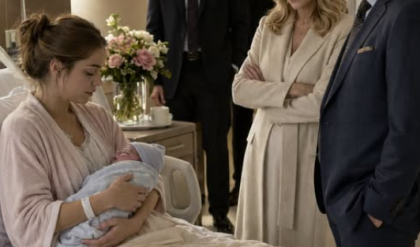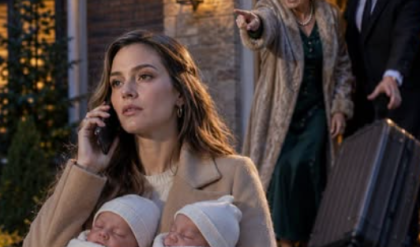
The nurse gave blood every first tuesday, never knowing the little boy she saved belonged to the most dangerous man in atlanta
So I gave.
Every month.
I never asked where it went.
I didn’t want a thank-you.
I didn’t want a story.
I didn’t want meaning tied up in a neat bow.
I just wanted somebody, somewhere, to have a better chance than that little boy had.
I never imagined that someone was Caleb Kang.
And I never imagined that his father would look at me like my blood had written my name into his life before we ever met.
Julian came back the next night.
And the night after that.
He never arrived loudly.
He didn’t need to.
His presence moved ahead of him.
Nurses straightened.
Security guards looked away.
Doctors suddenly remembered other places they needed to be.
But with Caleb, he was different.
He learned how to adjust the blanket without pulling the IV line.
He listened seriously when Caleb explained why velociraptors were misunderstood.
He held the basin during a bad nausea spell without flinching.
Once, around two in the morning, I found him asleep in the chair beside the bed, one hand resting lightly over Caleb’s wrist as if checking that life was still there.
I told myself that softened nothing.
A father loving his child did not make him safe.
A dangerous man could still tuck in a blanket.
On the fourth night, I went in to check Caleb’s vitals and found Julian awake beside the bed, his suit jacket gone, sleeves rolled to his forearms.
Caleb was asleep, Rex tucked under his chin.
“You work nights often?” Julian asked.
“When they schedule me.”
“You switched shifts twice this week.”
I paused with the thermometer in my hand.
“You checking my timecard now?”
“No,” he said.
“I notice things.”
“That must be exhausting.”
This time, he did smile.
Barely.
“Sometimes.”
I recorded Caleb’s temperature, blood pressure, oxygen level.
Julian watched in silence.
Not the way some parents watched, anxious and helpless.
He watched like he was memorizing the language of care.
“He trusts you,” he said.
“He’s a good kid.”
“That wasn’t what I said.”
I looked up.
Julian’s face was unreadable, but his voice had dropped.
“He asks for you when you’re gone.”
My chest tightened before I could stop it.
“A lot of children attach to nurses during long stays.
It happens.”
“Do you attach back?”
“That’s not a professional question.”
“No,” he said.
“It isn’t.”
The room went very quiet.
Caleb shifted in his sleep and murmured, “Miss Nora.”
Julian looked down at him.
Something in his face cracked.
Only for a second.
But I saw it.
“He’s been through too much,” I said softly.
Julian didn’t answer right away.
Then he said, “His mother left when he was three.
She decided my life was too heavy.
She wasn’t wrong.”
The honesty caught me off guard.
“I’m sorry,” I said.
“She took jewelry, cash, and a plane ticket to Miami.
She did not take him.”
His fingers curled around the armrest.
“So I kept him away from everything.
Private tutors.
Private doctors.
Houses with gates.
Men at every door.
I thought protection meant distance.”
“And now?”
His eyes found mine.
“Now I think maybe a locked room is still a cage, even if it’s expensive.”
I didn’t know what to say to that.
So I checked the IV pump.
Julian watched me for a long moment.
“You’re careful with him.”
“I’m his nurse.”
“No,” he said.
“You’re careful like you know what it feels like to be small and waiting for someone.”
My hand froze.
Grandma Ruth’s porch.
My mother’s packed suitcase.
Nine-year-old me sitting on the stairs pretending not to cry because crying never made anybody stay.
I turned slowly.
“You don’t know me, Mr. Kang.”
“No,” he said.
“But I want to.”
There it was.
Quiet.
Impossible.
Dangerous.
My grandmother’s third rule rang in my head like a church bell.
Never let a man with pretty eyes make you stupid.
“I need to finish rounds,” I said.
He stood as I moved toward the door.
Not to block me.
Just because I was leaving.
That somehow made it worse.
“Nora.”
I should not have turned.
I did.
“Thank you,” he said.
“For what?”
“For being kind when nobody paid you extra to be.”
I walked out before my face could betray me.
By the end of the week, everyone on the floor knew Julian Kang had requested that I be included in Caleb’s care conference.
Dr. Melissa Ward pulled me aside near the medication room.
She was a brilliant hematologist with silver-streaked hair, sharp eyes, and no patience for drama.
“You understand why this is unusual,” she said.
“I told him I’m a floor nurse.”
“So did I.”
“And?”
“He said, ‘Then put the floor nurse in the room.’”
I sighed.
Dr. Ward studied me over her glasses.
“Is there something I need to know?”
“No.”
“Nora.”
“There is nothing going on.”
She gave me the look older women give younger women when they recognize a lie because they used to tell it themselves.
“Good,” she said.
“Keep it that way until he is no longer the parent of your patient.”
“I know.”
“I’m not saying he’s a bad man.”
“You’re not?”
“I’m saying men like that don’t live normal lives, and women like you always think love can make monsters civilized.”
My throat tightened.
“I don’t love him.”
“I didn’t say you did.”
But her eyes did.
The care conference was held Thursday afternoon in a glass-walled room overlooking downtown Atlanta.
Julian arrived with two attorneys, one private physician, and a man named Vince who stood in the corner and spoke to no one.
He wore a navy suit, no tie, and an expression that made me think he had done terrible things with excellent posture.
Caleb’s condition had stabilized, but his clotting factors were unpredictable.
He needed ongoing transfusion support, home monitoring, and immediate access to compatible blood in emergencies.
“AB negative remains the central problem,” Dr. Ward said.
“Supply is limited.
We have been fortunate recently.”
At that word, fortunate, Julian looked at me.
I felt it like a hand on my spine.
The meeting continued.
I answered questions about Caleb’s appetite, sleep, mood, pain tolerance.
I explained that he hid symptoms when he thought adults were worried.
I told them he needed choices, even small ones, because his life had become a series of things done to him.
Julian listened without interrupting.
When I finished, he said, “She’s right.”
One of the attorneys began to speak.
Julian lifted one finger.
The attorney stopped.
I looked down at my notes and pretended my pulse was normal.
After the meeting, people filed out.
Dr. Ward gave me one last warning glance before leaving.
Then it was just Julian, Vince by the door, and me.
“You were good in there,” Julian said.
“I was honest.”
“That’s rarer.”
I gathered my papers.
“Caleb deserves people who pay attention.”
“Yes,” he said.
“He does.”
Something in his tone made me look up.
Julian glanced toward Vince.
The man stepped outside and closed the door.
Now we were alone.
Every alarm bell in my body went off.
“There is something you need to know,” Julian said.
“About Caleb?”
“About you.”
The papers slipped slightly in my hand.
“What about me?”
He inhaled slowly, like he was preparing to say something that couldn’t be unsaid.
Then the door opened.
Vince leaned in, expression hard.
“We have a problem.”
Julian’s face closed.
The man who had spoken gently about his son vanished.
The dangerous one returned.
“I have to go,” he said.
“Mr. Kang—”
“Julian,” he corrected, then stopped himself.
“I’ll explain later.”
He left without another word.
I stood in that glass room with my notes pressed to my chest and a question burning through me.
About me.
What could Julian Kang possibly know about me?
Part 2
I didn’t sleep that night.
I lay in bed staring at the ceiling of my small apartment while the city hummed outside my window.
A police siren wailed somewhere far off.
My neighbor’s television murmured through the wall.
My dying fern drooped on the windowsill like it, too, had heard something unsettling.
About you.
Those two words repeated in my mind until they became a pulse.
I was Nora Hayes.
Twenty-nine years old.
Registered nurse.
Rent paid on the third of every month.
Student loans almost manageable.
One grandmother, no parents worth mentioning, no secrets, no scandals, no enemies.
Nothing about me belonged in the orbit of Julian Kang.
At 2:17 a.m., my phone buzzed.
Unknown number.
Four words.
He asked for you.
I sat up.
My thumbs hovered over the screen.
Who is this?
The reply came instantly.
Julian.
Of course it was.
I should have blocked the number.
I should have reported the boundary violation.
I should have remembered that Dr. Ward was right and my grandmother was wiser than both of us.
Instead, I typed, Is Caleb okay?
He woke up scared.
Wanted to know if you were working.
I’m not.
I know.
Then why are you texting me?
A pause.
Because I told him I would ask.
I stared at that for a long time.
Then I wrote, Tell him Miss Nora says Rex is in charge until morning.
Rex must watch the IV pole and report any suspicious activity.
A minute passed.
Then Julian replied, He wants to know if Rex has authority over doctors.
I smiled despite myself.
Only if they touch the orange Jell-O.
Another pause.
Then: He laughed.
My heart did something foolish.
I put the phone facedown and whispered into the dark, “No.”
But the next morning, when I walked into Caleb’s room, the first thing he did was hold up Rex and announce, “He fired two doctors.”
“Good management,” I said.
Julian was standing by the window.
He looked tired.
Not weak.
Men like him probably considered weakness a luxury other people could afford.
But there were shadows beneath his eyes, and his jaw held too much tension.
“Rex is becoming a problem,” he said.
“Power changes people.”
Caleb giggled.
For one clean minute, we were almost normal.
Then Julian’s phone rang.
He looked at the screen, and whatever softness had been there disappeared.
“I’ll be outside,” he said.
He kissed Caleb’s forehead before leaving.
That kiss nearly ruined me.
Because violence from dangerous men is easy to fear.
Tenderness is what gets past the locks.
Later that afternoon, Dr. Ward asked me to pick up lab forms from the blood bank office downstairs.
The hospital basement always felt like another world.
Less light.
More metal.
The clean smell of disinfectant mixed with cold storage and old coffee.
I was waiting near the counter when two technicians rolled a cooler past me.
“AB negative?” one asked.
“Reserved for Kang,” the other said.
The name snapped my attention upward.
The first technician lowered her voice.
“Again?”
“He’s lucky they found that donor.
Same woman every month.
Perfect match.”
My skin went cold.
The second tech glanced at a clipboard.
“Nora Hayes.
Red Cross Peachtree.
First Tuesday donor.”
The room tilted.
My own name sounded impossible down there, spoken casually between coolers and labels and blood bags.
I stepped backward.
The folder in my hand bent.
“Nora?”
I turned.
Julian stood at the end of the hallway.
For a moment, neither of us moved.
Then I understood.
About you.
Not romance.
Not curiosity.
Not fate.
Blood.
“You knew,” I said.
His expression changed.
“Nora—”
“How long?”
He walked toward me slowly.
“Let’s not do this in a hallway.”
“How long?”
The technicians had gone silent behind the counter.
Julian stopped a few feet away.
“Two monThS.”
The words entered me like ice.
“My blood,” I whispered.
“Caleb has been receiving my blood?”
“Three times in the past year.
Twice before this admission.
Once during the emergency that brought him here.”
I pressed one hand against the wall.
Every first Tuesday.
The chair by the window.
The apple juice.
The little bandage.
The nurse saying, You’re doing a good thing.
Caleb’s pale face in Room 418.
His small hand gripping mine during a transfusion.
My blood running into his body while I told him a ridiculous story about a dinosaur who wanted to become mayor.
“You came here because of me,” I said.
Julian’s eyes did not leave mine.
“Yes.”
“Not because Caleb was admitted here?”
“I had him transferred here.”
My chest tightened.
“You moved your sick child to my hospital because of a donor file?”
“Because your blood had kept him alive.”
“You had no right.”
“I know.”
The answer was too immediate.
Too quiet.
It stole some of my anger, and I hated him for that too.
“I never asked where it went,” I said.
“That was the point.
I gave because it was supposed to be anonymous.
Clean.
Not—” My voice broke.
“Not this.”
His face tightened with something like pain.
“I told myself I only wanted to thank you,” he said.
“Then I saw you with him.”
“Don’t.”
“You knew how to reach him before I did.”
“Don’t make this romantic.”
“I’m not.”
“You are.
You’re standing there looking at me like this is destiny.”
His jaw worked once.
“What would you call it?”
I laughed, but it came out broken.
“A violation.”
That hit him.
Good.
I wanted it to.
For the first time since I had met him, Julian Kang looked like someone had managed to wound him without touching him.
“You’re right,” he said.
I blinked.
“I should have told you the moment I walked into that room.
I should have respected what your giving meant to you.
I did not.
I made a decision the way I make too many decisions—fast, privately, and with too much certainty that I knew best.”
The honesty shook me.
But not enough.
“You don’t get to buy your way into people’s lives,” I said.
“I didn’t.”
“You transferred him.”
“Yes.”
“You requested me in meetings.”
“Yes.”
“You texted me at two in the morning.”
A pause.
“Yes.”
My throat burned.
“Julian.”
He flinched slightly at his name.
“I need you to listen very carefully,” I said.
“I care about Caleb.
I will care for him as my patient with everything I have.
But I am not yours because my blood helped your son.
I am not part of some debt.
I am not a sign from God.
I am not something your money found and claimed.”
His eyes darkened.
“No,” he said.
“You are not.”
“I need space.”
He nodded once.
It looked like it cost him.
“You’ll have it.”
I walked away before I could cry.
For the next four days, Julian kept his word.
He came to Caleb’s room, but he did not corner me.
He spoke politely when necessary.
He stopped texting.
He requested other nurses when Caleb needed anything routine during my shift, which somehow hurt more than if he’d pushed.
Caleb noticed.
Children always notice the truth adults hide badly.
“Did Dad do something?” he asked one evening while I changed the tape on his IV.
I kept my voice light.
“Why do you ask?”
“You don’t make jokes at him anymore.”
“I make jokes at everyone.”
“Not the same.”
I smoothed the tape carefully.
“Your dad and I had a grown-up disagreement.”
“About me?”
My hands stilled.
Caleb was watching me with those serious dark eyes.
“No, sweetheart,” I said.
“Not because you did anything wrong.”
He looked down at Rex.
“My mom left because of Dad’s job,” he said.
The words came out small.
I sat beside him.
“Who told you that?”
“I heard people.”
I wanted to find every adult who had let that sentence reach him and shake them by the shoulders.
“Adults leave for adult reasons,” I said gently.
“But children are never the reason.”
He swallowed.
“Dad thinks everyone leaves.”
My heart cracked straight down the middle.
“Does he?”
Caleb nodded.
“So he acts like he doesn’t care first.”
There it was.
The entire dangerous architecture of Julian Kang, explained by a seven-year-old holding a stuffed dinosaur.
I brushed Caleb’s hair back from his forehead.
“Your dad cares,” I said.
“I know.” Caleb looked toward the window.
“He just doesn’t know how to be normal about it.”
I had to laugh softly.
“No,” I said.
“He really doesn’t.”
The next Tuesday, I went to donate blood.
For the first time in two years, my hand shook when I filled out the form.
“Same chair?” the nurse asked.
I almost said no.
Then I saw the mother across the room holding a toddler with a tiny bandage on his neck.
I saw an older man reading a Bible while waiting for plateleTS. I saw a teenage girl in a soccer hoodie squeezing a stress ball while her father stood behind her looking terrified.
My blood had gone to Caleb.
But it had never belonged only to him.
Giving was still giving.
Even if the world had complicated it.
So I sat in the chair by the window.
I rolled up my sleeve.
And I gave.
When I walked out twenty minutes later with my apple juice in hand, Julian was waiting across the street.
Not leaning against a black car like a movie villain.
Not surrounded by men.
Just standing on the sidewalk in a dark sweater, hands visible, posture still.
I stopped.
He did not cross toward me.
That mattered.
He waited for me to decide.
I should have kept walking to my car.
Instead, I crossed the street.
“You following me now?” I asked.
“No.”
“You just accidentally appeared outside the blood donation center?”
His mouth tightened.
“I wanted to make sure you were safe.”
“From what?”
He looked past me once, scanning the street, then back.
“From the consequences of being connected to me.”
My stomach dropped.
“What does that mean?”
“I have enemies.”
“I assumed.”
“One of them knows who you are.”
The air changed.
Traffic moved along Peachtree Street.
People passed with coffee cups and gym bags, living ordinary Tuesday lives.
Mine stopped.
“Because of the donor file?” I asked.
“Yes.”
“How?”
“My former partner.
Victor Shaw.”
The name meant nothing to me, but the way Julian said it did.
“He helped build my organization,” Julian continued.
“Then he decided he wanted all of it.
Money, routes, loyalty.
My son’s illness made me vulnerable.
You make me more vulnerable.”
“I don’t make you anything.”
His eyes softened.
“No.
My feelings do.”
I looked away.
“Nora,” he said, voice low.
“I won’t touch your life without permission again.
But I need you to understand the danger.”
“Is this supposed to scare me into accepting protection?”
“No.
It’s supposed to tell you the truth I should have told you sooner.”
I hated how much that mattered.
A cold wind moved between us.
“What does Victor Shaw want?” I asked.
“To pressure me.”
“By hurting me?”
Julian’s face became still.
Too still.
“He may try.”
My fingers tightened around the apple juice bottle until the plastic crackled.
“I’m a nurse,” I said.
“I go to work.
I call my grandmother.
I forget to water planTS. I don’t know what to do with a sentence like that.”
“I know.”
“No, you don’t.
Because in your world, threats are normal.”
His eyes held mine.
“And in your world, you run toward bleeding people while everyone else runs away.”
That shut me up.
He stepped one inch closer, then stopped himself.
“I am sorry,” he said.
“For the file.
For the hospital.
For making you feel claimed when all I felt was grateful and terrified.”
My chest hurt.
“I don’t know how to trust you.”
“Then don’t yet.”
It was the best answer he could have given.
He reached into his coat and pulled out a folded piece of paper.
I stiffened.
He saw it and froze.
Slowly, carefully, he held the paper out.
“No tracking device,” he said.
“No contract.
No dramatic gesture.”
Despite everything, I almost smiled.
“What is it?”
“A phone number.
Not mine.
A detective named Angela Morris.
She is not on my payroll.
She owes me nothing.
If anything happens that makes you uncomfortable, call her before you call me.”
I stared at the paper.
“You’re giving me someone outside your control?”
 Mother-In-Law Wanted A Grandson So Badly, She Secretly Interfered With Her Son’s Marriage
“Yes.”
“Why?”
“Because you should have something I can’t touch.”
That was the moment my anger began to loosen.
Not disappear.
But loosen.
I took the paper.
His hand dropped back to his side.
“Caleb asked about you this morning,” he said.
“I’m working tonight.”
“I know.”
“Of course you do.”
A faint smile.
Then he grew serious.
“He made you something.”
“What?”
“A drawing.”
“Another dinosaur?”
“You, actually.”
My heart betrayed me.
“He said your hair was difficult.”
Julian looked down for half a second.
“I may have helped.”
“You drew my hair?”
“Badly.”
“How many times?”
His eyes lifted.
“Four.”
I laughed before I could stop myself.
It came out soft, surprised, alive.
Julian stared at me like the sound had struck something inside him.
Then my phone rang.
Grandma Ruth.
I answered quickly, grateful and terrified.
“Hey, Grandma.”
“Baby,” she said, “why is there a black car parked outside my house?”
The world went silent.
Part 3
Julian saw my face change.
“What happened?”
I couldn’t speak.
Grandma Ruth’s voice sharpened through the phone.
“Nora? You hear me? There’s a man sitting in a black car across the street, and don’t you dare tell me it’s nothing.
I was born at night, not last night.”
My blood turned to ice.
“Grandma, lock the door.”
“It is locked.”
“Go to the back room.”
“Who is this man?”
I looked at Julian.
His face had become something terrifying.
Not angry in the normal way.
Focused.
Deadly.
“Put the phone on speaker,” he said.
I did.
“Mrs. Ruth,” Julian said, voice controlled, “my name is Julian Kang.
I’m a friend of Nora’s.
I have people nearby who can help.”
Grandma Ruth did not miss a beat.
“Are you the reason somebody is outside my house?”
Julian closed his eyes for one brief second.
“Yes, ma’am.”
“Then you better be the reason they leave.”
Something flashed across his face.
Respect.
“Yes, ma’am.”
He gestured once.
A black SUV pulled from around the corner so quickly I realized it had been there the whole time.
Two men stepped out, not rushing, not drawing attention, but moving with purpose.
Julian took his own phone out and spoke in a language I didn’t understand.
His voice remained low.
Calm.
That somehow made it worse.
I heard Grandma breathe on the line.
Then she said, “The car’s moving.”
“Stay inside,” Julian said.
“You don’t give me orders, young man.”
“Please,” he said.
That single word changed the temperature.
Grandma went quiet.
Then, “Nora, baby, are you safe?”
I looked at Julian.
At the apple juice still in my shaking hand.
At the paper with Detective Morris’s number folded between my fingers.
“I don’t know,” I said honestly.
Julian’s jaw tightened like the truth hurt him.
“I’m coming over,” I told her.
“No,” Julian said immediately.
I turned on him.
“That is my grandmother.”
“And Victor may want you to run exactly there.”
“I am not leaving her alone.”
“She won’t be alone.”
“I don’t know your people.”
“I do.”
“That is not enough for me!”
People on the sidewalk glanced over.
Julian lowered his voice.
“Nora, please think.”
“I am thinking.
I’m thinking that before you walked into my hospital, my grandmother did not have strange cars outside her house.”
He absorbed that like a blow.
“You’re right,” he said.
Again, that answer.
No defense.
No excuse.
Just the truth standing between us with blood on its hands.
He looked at his phone, read a message, then said, “The car is gone.
My men are staying outside until police arrive.”
“I’m calling Detective Morris.”
“Good.”
He said it like he meant it.
So I called her.
Detective Angela Morris answered on the second ring with a voice like black coffee and bad news.
“Hayes?”
“How did you—”
“Kang said you might call.
Tell me what happened.”
I did.
She listened without interrupting.
Then she said, “Go to the hospital.
Public place, cameras, security.
Do not go home.
Do not go to your grandmother.
I’m sending a patrol car to her address, and I’m coming to St.
Mary’s.”
I looked at Julian.
He nodded once.
Not controlling.
Agreeing.
That small difference mattered more than I wanted it to.
By the time we reached the hospital, the sky had turned the color of wet concrete.
Julian did not ride with me.
I refused.
He followed in a separate car, close enough to protect, far enough to respect the line I drew.
Inside St.
Mary’s, the ordinary sounds almost broke me.
Elevator chimes.
Shoes on tile.
A child crying because he didn’t want medicine.
A nurse laughing at the station.
Life continuing while mine cracked open.
Caleb was asleep when I entered his room.
His cheeks had color again.
Rex lay crooked beside his pillow.
On the tray table was a drawing.
Three people stood under a yellow sun.
A little boy.
A tall woman with careful curls.
A man in a black coat holding both their hands.
Underneath, in uneven letters, Caleb had written:
my safe people.
I covered my mouth.
Julian stood in the doorway behind me.
He didn’t speak.
For once, neither did I.
Detective Morris arrived thirty minutes later.
She was in her fifties, with close-cropped hair, a beige trench coat, and the tired eyes of someone who had spent a career watching powerful men lie.
She shook my hand first.
Then she looked at Julian.
“Kang.”
“Morris.”
“Still allergic to doing things the easy way?”
“Still allergic to answering my calls?”
“I answer when innocent women get dragged into your mess.”
Julian did not argue.
Detective Morris took my statement in a private waiting room.
She explained that Victor Shaw had been under investigation for extortion, trafficking stolen medical supplies, and laundering money through shell clinics.
Caleb’s medical needs had exposed donor information through someone bribed inside a third-party logistics contractor connected to blood transport.
Not the Red Cross.
Not the hospital.
A contractor.
A small leak in a large system.
Enough to put my name in the wrong hands.
“I need to know something,” I said, my voice steadier than I felt.
“Am I in danger because I donated blood?”
Detective Morris looked at me carefully.
“You’re in danger because a criminal thinks you matter to Julian Kang.”
I swallowed.
Across the room, through the glass wall, Julian stood alone with his hands in his pockets, looking at nothing.
“Do I?” I asked.
Detective Morris followed my gaze.
“That’s between you and him.”
“That’s not an answer.”
“No,” she said.
“It’s the only honest one.”
That night, Victor Shaw stopped hiding.
He sent a video to Julian’s phone.
Julian did not want me to see it.
I insisted.
We stood in a hospital conference room with Detective Morris, Dr. Ward, and Vince.
Julian’s face was carved from stone as he played the message.
Victor Shaw appeared on screen in a leather chair, silver-haired, handsome in the polished way of men who mistake cruelty for elegance.
“Julian,” he said pleasantly.
“You always did have a weakness for lost things.
First the boy.
Now the nurse.”
Julian’s hand tightened around the phone.
Victor smiled.
“Here’s the problem with rare blood.
It makes a person valuable.
And valuable things should be controlled.”
My stomach turned.
Detective Morris muttered, “Idiot just gave me probable cause wrapped in a bow.”
Victor leaned closer to the camera.
“You have until midnight to sign over the port accounTS. Or I send people to collect what your son needs most.”
The video ended.
Silence filled the room.
I could hear my own heartbeat.
Julian looked at me.
Something like shame moved across his face.
“I’m sorry,” he said.
I believed him.
But belief did not erase fear.
“What happens now?” Dr. Ward asked.
Detective Morris was already typing.
“Now he gets arrested if he comes within ten feet of her.”
Julian’s voice was cold.
“He won’t come himself.”
“No,” Morris said.
“Men like Shaw rarely do.”
Vince spoke for the first time.
“Then we give him a reason to.”
Julian looked at him.
“No,” I said.
Every head turned toward me.
I felt suddenly ridiculous.
A nurse in scrubs, standing among criminals, cops, and doctors, about to speak like I had any authority in this world.
But then I thought of Grandma Ruth.
Never walk past suffering if you can do something about it.
And never let a man with pretty eyes make you stupid.
“I am not bait,” I said.
“I am not leverage.
I am not rare blood in a body you all move around like a chess piece.”
Julian’s eyes softened.
“I know.”
“Do you?” I looked around the room.
“Because everybody keeps deciding things around me.
For me.
About me.
Victor, you, the hospital, the police.
I donate blood.
I care for patienTS. That does not make me public property.”
Detective Morris nodded slowly.
“Fair.”
I turned to Julian.
“You want to protect me?”
“Yes.”
“Then start by asking what I want.”
He went still.
The room did too.
Then Julian Kang, the man who owned half the city’s fear, lowered his voice and asked, “What do you want, Nora?”
My answer surprised even me.
“I want Caleb moved somewhere safe tonight.
Not one of your houses.
Somewhere medical, legal, documented.
I want my grandmother protected by police, not just your men.
I want Detective Morris in charge of anything involving me.
And I want you to stop thinking you have to become worse to keep people safe.”
His face changed.
That last part hit deepest.
“I don’t know how,” he said quietly.
The honesty nearly broke me.
“Then learn,” I said.
At 11:42 p.m., Victor Shaw’s men entered the hospital through the loading dock.
They were not dramatic.
No guns waving.
No shouted threaTS.
Just three men in maintenance uniforms with forged badges and a cooler marked for medical transport.
But Detective Morris had already flagged the dock.
Hospital security had already rerouted cameras.
Julian’s people had already stepped back far enough to let the law do what the law needed to do.
The arrests happened in under ninety seconds.
No shootout.
No blood.
No chaos.
Just handcuffs, shouted commands, and one man face down on the concrete yelling that Julian Kang was a dead man.
Victor Shaw was arrested thirty minutes later at a private airfield outside Marietta, where he was trying to leave Georgia with two passports and a suitcase full of cash.
Detective Morris told me at 1:08 a.m.
I sat in Caleb’s room holding his small hand while he slept through the end of the nightmare.
Julian stood on the other side of the bed.
For a long time, neither of us spoke.
Then he said, “You were right.”
I looked up.
“I have spent my life believing fear was the only language men like Shaw understood,” he said.
“So I spoke it better.
Louder.
More fluently.”
His eyes moved to Caleb.
“But fear built a world where my son needed guards before he needed friends.”
My throat tightened.
“And you?” I asked.
A faint, sad smile touched his mouth.
“I needed a nurse to tell me I was not God.”
Despite everything, I laughed softly.
His eyes warmed.
“I’m serious,” he said.
“I know.”
He walked around the bed slowly, stopping beside my chair.
“I can’t make my past clean,” he said.
“I can’t pretend I’m a simple man with a simple life.
But I can change what I choose from here.”
“You make that sound easy.”
“It won’t be.”
“No,” I said.
“It won’t.”
“I’ll cooperate with Morris.”
I stared at him.
He nodded once.
“There are things I know.
Things that can end what Shaw started and keep men like him away from my son.
It will cost me.”
“Your business?”
“Parts of it.”
“Your power?”
“Yes.”
“Does that scare you?”
Julian looked at Caleb.
Then at me.
“Yes.”
The word was plain.
Human.
Real.
I reached for his hand.
This time, he was the one who trembled.
Three months later, Julian Kang testified behind closed doors in a federal investigation that dismantled Victor Shaw’s network and exposed corruption across three states.
The newspapers called it a shocking cooperation deal.
The business channels called it a strategic restructuring.
Grandma Ruth called it “that man finally showing some sense.”
Kang Logistics survived, smaller and cleaner.
Julian sold the businesses that had always lived too close to the dark.
He kept the legitimate routes, the restaurants, the warehouses.
He fired men who confused loyalty with violence.
He hired auditors who looked terrified during their first week and smug by their third.
He moved Caleb out of the gated estate and into a warm brick house in Buckhead with a backyard big enough for dinosaur expeditions.
Caleb returned to school part-time in January.
He still needed monitoring.
Still needed transfusions sometimes.
Still had days when his body reminded everyone that love did not cure blood.
But he laughed more.
He grew two inches.
He decided Rex needed a formal title and began calling him Professor Rexington.
And every first Tuesday, I still donated blood.
Not because Julian asked.
He never did.
Not because Caleb needed it.
Sometimes he did.
Sometimes he didn’t.
I gave because somewhere, somebody was waiting for a miracle that did not need to know their name.
The first time Julian asked me to dinner after everything settled, he did it properly.
No commands.
No assumptions.
No black car outside my apartment.
He showed up on Grandma Ruth’s porch wearing a navy coat and holding peach cobbler from the bakery she liked.
Grandma opened the door, looked him up and down, and said, “You plan on bringing trouble into my house?”
“No, ma’am,” Julian said.
“You plan on breaking my granddaughter’s heart?”
His eyes moved to me, then back to her.
“No, ma’am.”
“You plan on lying?”
A pause.
“No, ma’am.
But I may answer slowly when the truth is difficult.”
Grandma stared at him.
Then she stepped aside.
“At least you’re not stupid.”
Dinner was loud, warm, and strange.
Grandma told stories about me as a child.
I threatened to leave twice.
Caleb laughed so hard at a story about me cutting my own bangs in fifth grade that he spilled lemonade on the table.
Julian watched all of it like a man witnessing weather he had never been allowed to stand under.
After dinner, we sat on the porch swing.
The same porch swing that had held me through every lonely year of my childhood.
Julian’s shoulder brushed mine.
For once, the silence between us did not feel dangerous.
It felt earned.
“I used to think love meant someone arriving strong enough to save you,” he said.
I looked at him.
“And now?”
He watched Caleb through the window, helping Grandma dry dishes with intense seriousness.
“Now I think love is someone telling you the truth before your lies become a house your child has to live in.”
My eyes burned.
“That’s a very expensive lesson.”
He smiled faintly.
“I learn slowly.”
“No,” I said.
“You learn carefully.”
He turned toward me.
The porch light softened the hard lines of his face.
He was still Julian Kang.
Still complicated.
Still a man with a past that would never be gentle.
But he was also Caleb’s father.
The man who had stepped back when I told him to.
The man who gave me a detective’s number instead of a demand.
The man who chose to lose power rather than let his son inherit fear.
“I’m not easy to love,” he said.
I thought about my own locked doors.
My practiced independence.
My fear of being needed only until someone didn’t need me anymore.
“Neither am I.”
He looked almost amused.
“Nora.”
“It’s true.”
“You are the easiest thing in my life to love.”
The words landed quietly.
No grand music.
No thunder.
Just a porch swing, winter air, Caleb laughing inside, Grandma humming near the sink, and my heart deciding it was tired of pretending not to know.
“Julian,” I whispered.
He waited.
That was what finally undid me.
He waited.
So I leaned forward and kissed him.
Not because my blood had saved his son.
Not because danger made everything brighter.
Not because fate forced my hand.
I kissed him because he had learned to ask.
Because I had learned that ordinary was not the same as safe.
Because some seeds grow in secret for years before they break open the ground.
And because inside the house, a little boy who once believed everyone left was laughing like he finally trusted someone would stay.
One year later, Caleb stood in the backyard wearing a paper crown that said Professor Rexington’s Assistant and announced that his birthday party had official rules.
“No crying,” he said.
“Unless it’s happy crying.
Grandma Ruth, that means you.”
Grandma dabbed her eyes with a napkin.
“Boy, don’t start with me.”
Dr. Ward was there.
Detective Morris too.
Half the pediatric floor came after their shifts, carrying gifts, cupcakes, and enough dinosaur decorations to embarrass a museum.
Julian stood beside me near the porch, his hand warm at my back.
No guards hovered at the fence.
No black cars waited at the curb.
Just family.
Messy, chosen, imperfect family.
Caleb ran over and grabbed my hand.
“Miss Nora,” he said, though he had started calling me just Nora months ago when he wanted to sound grown.
“Come see the cake.”
The cake was green, enormous, and leaning dangerously to one side.
“It’s a volcano,” Caleb explained.
“It looks unstable,” Julian said.
“That’s because it’s erupting.”
“With frosting?”
“With science.”
I laughed.
Julian looked at me.
He still did that sometimes.
Looked at me like he couldn’t quite believe I was real.
But now I looked back without running.
Later, after the candles were blown out and the backyard was littered with paper plates, Caleb climbed onto the porch swing between us, sleepy and frosting-stained.
“Dad?” he murmured.
“Yes, buddy?”
“Did Nora’s blood really save me?”
Julian’s hand stilled.
I looked at Caleb carefully.
We had told him pieces.
Gentle ones.
Age-appropriate ones.
But children grow toward truth the way plants grow toward light.
“Yes,” I said softly.
“Some of it did.”
Caleb looked at my arm, then at his own.
“So we matched before we met?”
My throat tightened.
Julian’s eyes shone in the porch light.
I brushed frosting from Caleb’s cheek.
“Yes,” I said.
“I guess we did.”
Caleb thought about that.
Then he leaned against me with absolute trust.
“Good,” he whispered.
“I was waiting for you.”
Julian closed his eyes.
Grandma Ruth, sitting nearby, pretended not to cry and failed.
I wrapped one arm around Caleb and reached my other hand toward Julian.
He took it.
Once, I believed giving meant letting something leave you.
Blood.
Time.
Love.
I thought generosity was a kind of loss you chose because someone else needed it more.
But I was wrong.
Sometimes what you give travels farther than you ever will.
Sometimes it finds a hospital room, a lonely child, a dangerous man trying to become gentle, and a family waiting in pieces for the one person who can stitch them together.
I had donated blood every month without knowing where it went.
I thought I was saving strangers.
I never knew I was keeping Julian Kang’s only son alive.
I never knew that one quiet act, repeated faithfully, would lead me to a boy with dinosaur stickers on his IV pole, a grandmother who could scare criminals with one sentence, and a man who had to lose an empire to learn how to build a home.
But life is like that sometimes.
The most important love stories don’t begin with roses or perfect timing.
Some begin with a needle in your arm on a Tuesday morning.
Some begin with a child surviving the night.
And some begin when a man walks into a hospital room like he owns the air, only to discover that the woman standing beside his son’s bed has already given him the one thing money could never buy.
A chance.
THE END